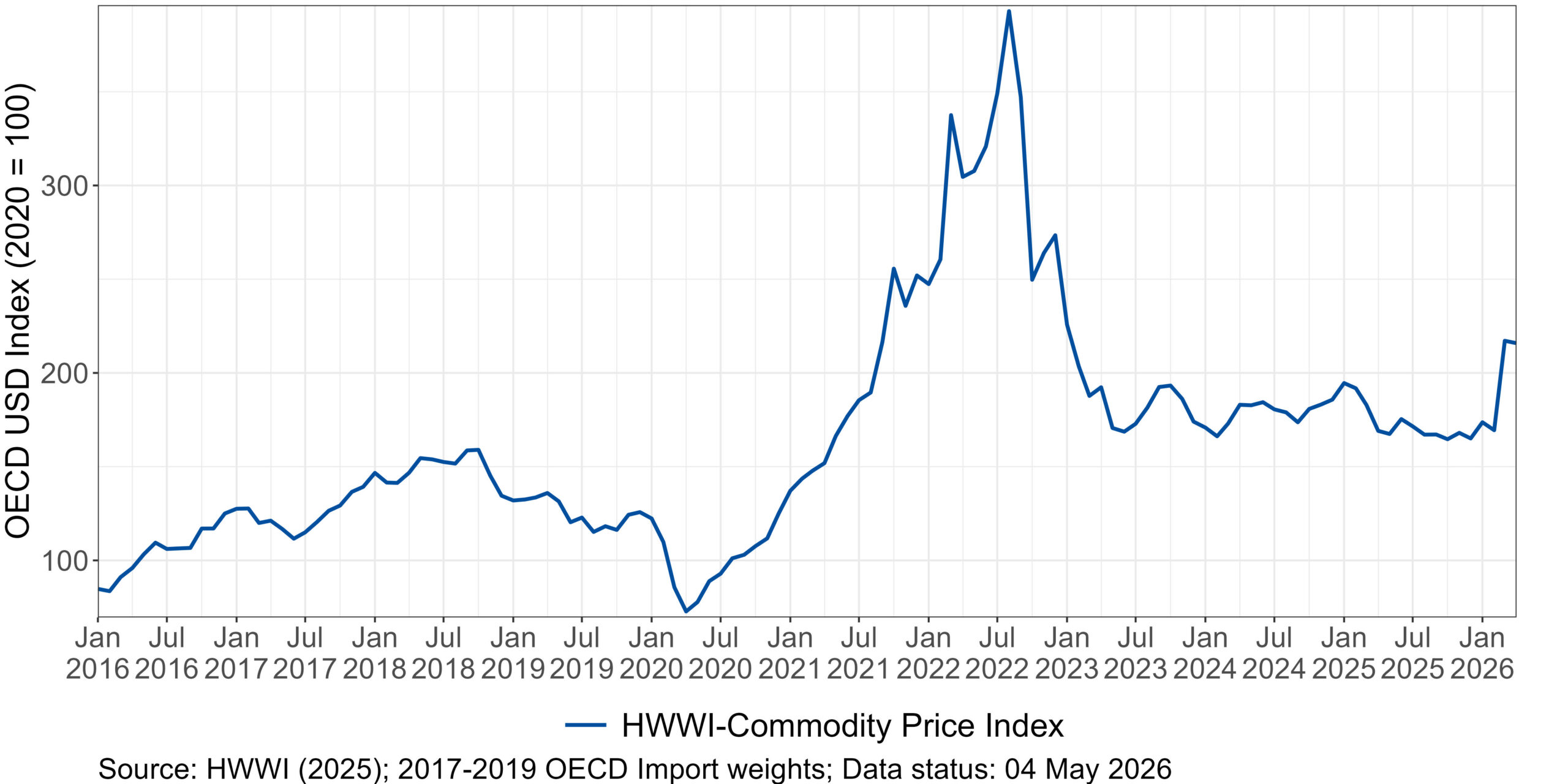


Sharp increase in the HWWI Commodity Price Index following the Iran war
Over the past three months, the HWWI Commodity Price Index showed strong volatility. Following a decline of -2.4 % in February, the index rose by 28.1 % in March 2026 after the outbreak of the Middle East conflict. In April, the index stabilised (-0.6 %), but still remained 27.7 % above the corresponding value of the previous year (data as of 04.05.2026).
The slight decline in February was mainly attributable to lower values in the food index (-6.0 %) and the industrial raw materials index (-4.7 %). While the energy raw materials index moved only slightly in February (-1.2 %), it was the main driver behind the sharp increase in the overall index in March, rising by 39.0 %. In April, energy commodity prices declined slightly again (-1.7 %). Compared with April 2025, however, the energy raw materials index still stood around 37.3 % higher.
European natural gas prices showed a volatile pattern over the reporting period. In February 2026, prices declined by 5.7 % compared with the previous month. In March, however, prices rose sharply by 58 %. In April 2026, prices declined again by 12.4 %. While prices at the beginning of the reporting period were still below the level of the previous year (February: -26.9 %), they exceeded this level sharply in March (+34.8 %). Ultimately, prices in April remained 34.4 % above the level recorded in April 2025.
After the initially negative development in February, the food and beverages index increased again over the remainder of the reporting period. In March, the index rose by 2.8 %, followed by a further increase of 1.2 % in April. Despite this moderate increase, the index in April 2026 remained 16.7 % below the level of the previous year.
The development of the food index in February 2026 was mainly shaped by price movements in cocoa (-28.4 %). In March 2026, cocoa prices declined further by 9.6 %. In April, a moderate recovery of 4.4 % followed. Compared with the previous year, cocoa prices were 63.4 % lower in February, 59.9 % lower in March and 58.5 % lower in April. Coffee prices also showed considerable movements during the same period. In February 2026, they declined moderately by 9.8 %, increased slightly in March (+2.3 %) and fell again in April (-2.6 %). Compared with the previous year, coffee prices were 24.5 % lower in February and moved somewhat closer to the previous year’s level over the following months (April: -20.7 %). Despite the continued decline in cocoa prices, the food and beverages index increased over the last two months. This was partly attributable to higher wheat prices, which rose by 11.1 % in March and by a further 4.4 % in April.
The industrial raw materials index declined in February (-4.7 %), but recorded increases again in March and April of 1.3 % and 4.1 %, respectively. Overall, the sub-index remained around 20.9 % above the previous year’s level. Copper prices declined by 0.7 % in February compared with the previous month. In March, this development continued with a further decline of 3.6 %, before prices increased again by 2.6 % in April 2026. Compared with the previous year, copper prices were 39.0 % higher in February 2026. This gap narrowed to 28.4 % in March but widened again to 39.6 % in April. Significant price increases were also observed for aluminium in recent months. Aluminium prices rose by 9.9 % in March and by a further 6.6 % in April. Price increases were also recorded for cotton and wool, although their weighting within the index is comparatively lower. Tin prices did not continue the previously observed strong upward trend and remained relatively stable overall. In February 2026, prices declined by 1.7 % compared with the previous month, followed by a further decrease of 2.4 % in March. After these moderate declines, prices rose again by 2.3 % in April 2026. Over the entire period, however, tin prices remained substantially above the corresponding levels of the previous year: by 52.7 % in February 2026, 39.6 % in March and 49.6 % in April 2026.