


The Iran conflict and lack of reform are slowing down the German economy
HWWI Forecasts, No. 2/2026, Hamburg Institute of International Economics.
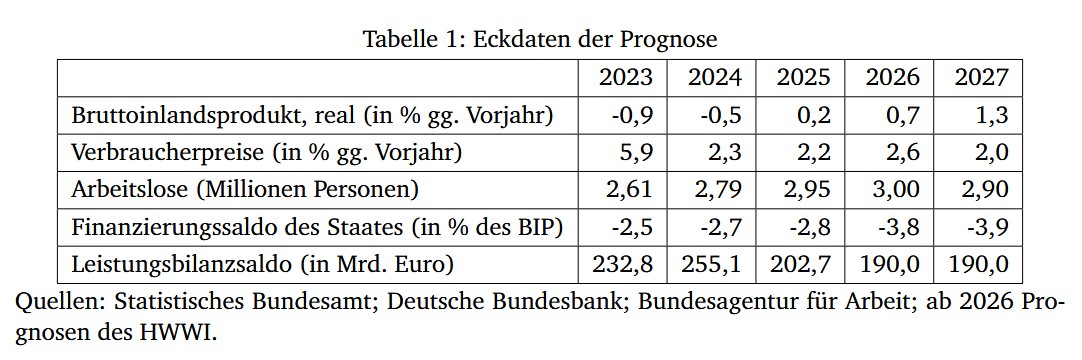
After a good start to this year for the German economy, the outlook for growth and inflation has deteriorated significantly since the end of February due to the Iran war, in particular the closure of the Strait of Hormuz and the associated increase in energy prices. The closure of the Strait of Hormuz is now lasting longer than initially expected. The erratic US tariff policy is also noticeably dampening German export activities. However, the mood in the economy has also been affected by home-grown problems, especially because the reform process is progressing slowly and has been overshadowed by disagreements within the coalition government. The further development of the Iran conflict is unclear, and the upcoming reforms harbor potential for conflict. Even if the Strait of Hormuz will soon become passable again and oil and gas prices will fall, the increase in energy prices will continue to have an impact for some time. And the subdued mood among investors and consumers is likely to cause restraint for the time being. Only government consumer spending and fiscal programs for infrastructure and defense provide impetus. Under these conditions, the German economy is likely to grow by just under 3/4% this year. In 2027, with an end to the Iran war and a more consistent reform policy, real gross domestic product could grow by 1 1/4%.
The consumer price inflation rate has been moving towards 3% recently, mainly because energy prices have risen significantly. This will still provide some cost impulses, even if the fuel discount has initially slowed down price inflation. However, with the development assumed here, the inflation rate would soon exceed its peak. On an annual average in 2026, it would then be just over 2 1/2%. In 2027, it could move back towards 2%.
This forecast entails considerable risks. The further development of the US-Iran conflict is open. An even longer closure of the Strait of Hormuz would further reduce growth opportunities and increase the risks of inflation. There are also growing doubts that the coalition government will consistently implement the announced structural reforms and use the special debt opportunities for additional investments.