


The economic dimension of sport in Hamburg
HWWI Studies, No. 6, Hamburg Institute of International Economics.
The study comprehensively examines the economic importance of sport for the Free and Hanseatic City of Hamburg. Sport not only fulfils central social functions such as health promotion, social integration and increasing life satisfaction, but also acts as an important – often underestimated – economic factor. Since sport is not shown as a separate economic sector in the official statistics, its economic effects often remain hidden. The study closes this gap and systematically analyzes the direct, indirect and induced effects of the sports industry in Hamburg.
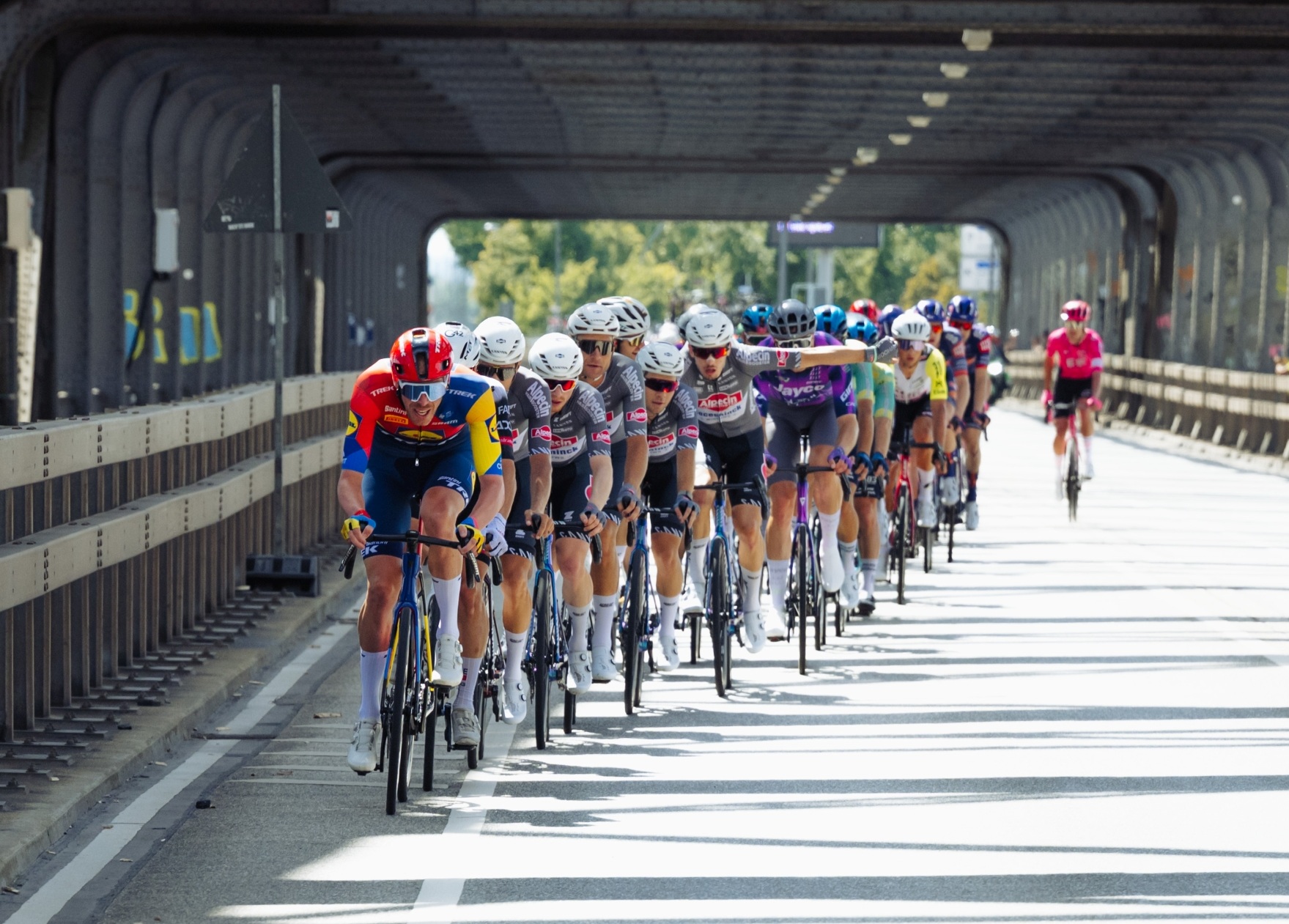
Hamburg is one of the most active sports regions in Germany. The Active City Strategy promotes the expansion of sports infrastructure and the participation of the population in sporting activities. The city has a wide range of sports on offer, from a strong popular sport to a dynamic fitness and health industry to successful professional sports structures. Hamburg is also regularly the venue for important sporting events that go far beyond the sporting aspect and generate considerable economic effects. In addition to Bundesliga football at Hamburger Sport Verein and FC ST. Pauli, these include the World Triathlon Hamburg, the Cyclassics, the traditional tennis tournaments at Rothenbaum and the rapidly growing HYROX format. These events attract tens of thousands of athletes and spectators every year, increase the occupancy rate of hotels and restaurants, increase the city’s media presence and act as a catalyst for additional consumer spending. They thus make a significant contribution to tourism value creation and Hamburg’s international positioning as a sports metropolis.
The input-output analysis carried out as part of the study impressively shows how large the economic reach of sport is. For the sports sector, this results in a gross value added multiplier of 2.4. This means that for every euro of value added in the sports sector, there is a total of 2.4 euros of overall economic value added in Hamburg. The employment multiplier is 2.3, which indicates that each job in the sports sector secures a total of 2.3 jobs in Hamburg’s economy. Overall, the sports sector is related to 14,744 jobs and 5,311.94 million euros in gross value added within Hamburg.
The study makes it clear that sport has an impact far beyond its immediate core area and is a significant growth engine for numerous upstream and downstream industries. Major sporting events reinforce this effect particularly significantly by attracting tourists, creating international visibility and triggering additional sales in the hotel, gastronomy, retail, transport and media industries. The results prove that sport is a strategically relevant component of Hamburg’s regional economic performance and location development. The study thus forms a sound basis for future economic and urban development policy decisions and underlines the importance of sport as a social, cultural and economic engine of the city.